
East Baton Rouge Parish Civil Docket Searches
Major parish civil cases start online. The East Baton Rouge Parish Clerk of Court points remote users to ClerkConnect online access. That service carries civil information through a Civil Inquiry route. The route needs an account and a subscription. A casual visitor will not get far without one. Have a case number ready from a filing, notice, or judgment, because it is the strongest identifier the system accepts. The free path is a counter visit during posted hours. Civil Suit Records handles public civil documents, and other clerk counters route related record types. A party name helps once you are in. But the court, the case number, and the filing range keep a civil docket search from starting in the wrong record series.
- Identify whether the case is a 19th JDC, Family Court, city-court, or justice-court matter.
- Use the official civil inquiry route for a subscribed remote search or visit the appropriate counter.
- Confirm the case title, action number, and court before reviewing docketed events.
- Read the most recent setting, motion, order, or judgment beside the earlier sequence.
- Request the document or certified copy from the clerk when an event listing is not sufficient.
East Baton Rouge Parish Civil Record Routing
Older civil numbers in East Baton Rouge Parish live in different buildings. The Civil Suit Records page spells out exactly where each range sits. Current numbers, from 630,100 forward, stay at the courthouse. Anything from 586,227 through 630,099 belongs to City Hall instead. Numbers below 586,227 go to Archives. So a dead end in an online civil docket search may just mean the record sits in storage. It does not mean no case was ever filed.
For help in person, Suit Records occupies Room 3310 and answers at (225) 389-3972. Civil Processing sits in Room 3201 and can be reached at (225) 389-3967. Tell the clerk the record number and the type of civil document you need. Pleadings, judgments, and a docket listing are distinct products.
For remote access to a current civil docket, the East Baton Rouge Parish Civil Inquiry screen is the login-gated route. Its page shows the search fields a visitor will face.
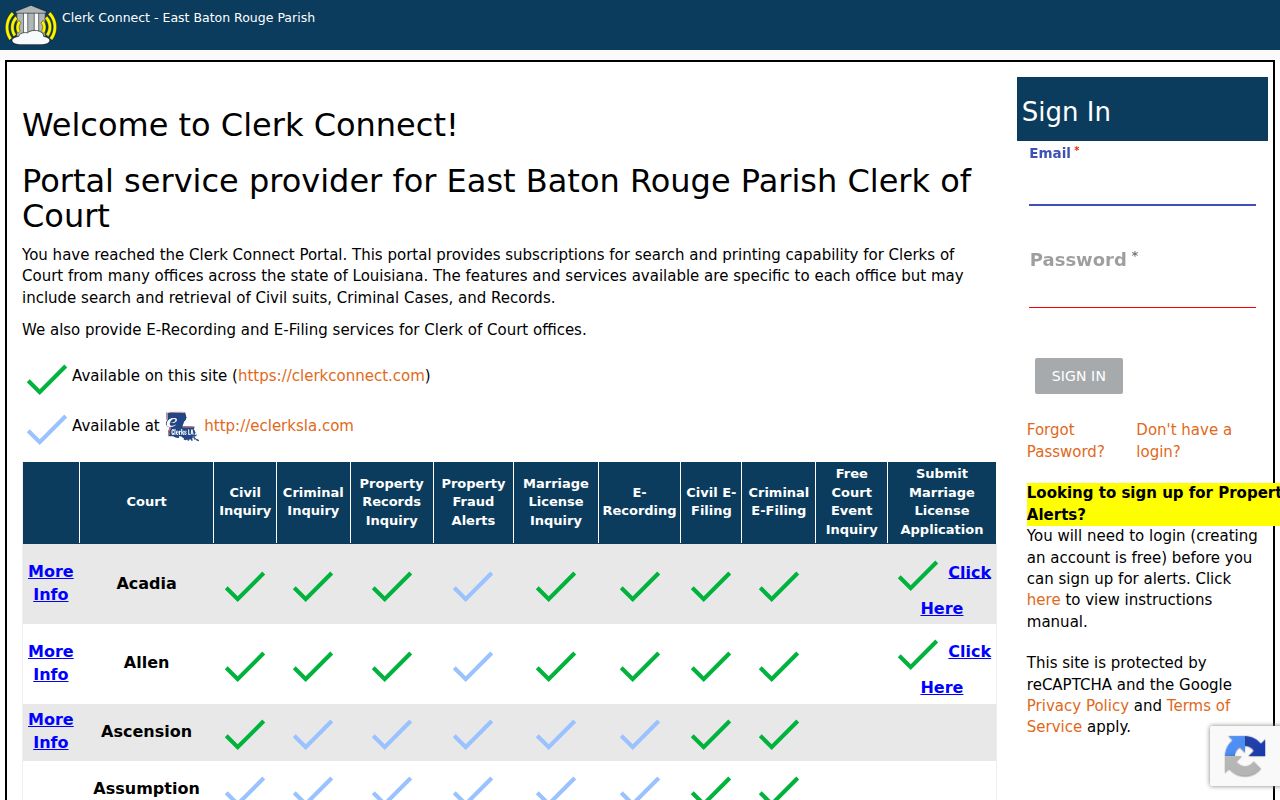
The screen states plainly that the remote inquiry runs as a subscription service. A civil counter search at the clerk's office remains a separate option.
Civil Dockets: What They Show
A civil docket is a running register, not just the final judgment. Entries in an East Baton Rouge Parish civil case can cover the petition, service activity, an answer, an exception, a motion, a setting notice, an order, a judgment, an appeal, or post-judgment process. Article 254 sets the state docket-book framework. What each entry actually shows depends on what gets filed and entered in that case.
| Action number and title | The clerk's identifying number and the formal case caption. |
|---|---|
| Filing and pleadings | Petition, answer, exception, motion, and other dated court filings. |
| Setting information | Notice of setting, conference, hearing, trial, or other scheduled court action. |
| Orders and judgment | The court's ruling, judgment, default judgment, nonsuit, or other recorded outcome. |
| Costs and counsel | Required docket-book categories that can explain representation and case activity. |
An entry points to an event. It is not automatically the filed petition's image or the certified judgment another court may require.
East Baton Rouge Parish Paperless Civil Files
East Baton Rouge Parish moved to electronic systems in 2018. The shift covered civil, family, and probate filing and storage. A tighter shift followed in October 2020. Ordinary civil suit files largely stopped keeping paper then. Some things still arrive on paper: probate matters, original notes, foreign judgments, and certain administrative records. For everything else, the clerk may hold the ordinary paper filings for just 90 days. Destruction follows after that.
That policy changes what a civil docket entry means in practice. A filing can appear on the docket while no paper jacket waits in a back room. Under La. C.C.P. art. 253, the electronic record may be the official record. So ask by name. Request the electronic document, the docket, or a certified copy rather than a general case file.
The Civil Suit Records policy lays out the paperless transition. It also explains how record numbers route among the clerk's locations.
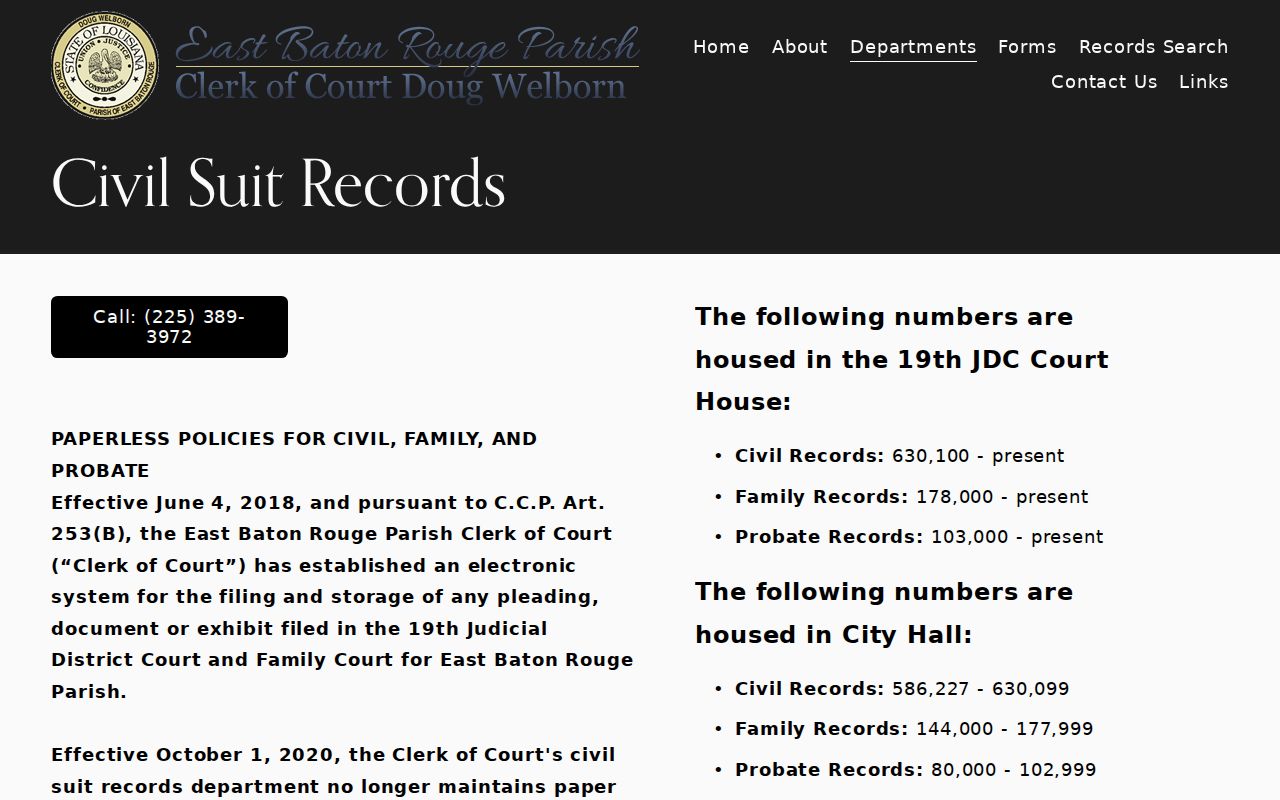
That policy explains why an older paper expectation and a current electronic docket can disagree. It is a useful local answer to a confusing mismatch.
What Cases Fill the Civil Docket
The 19th JDC clerk system holds the big East Baton Rouge Parish civil suits, along with the pleadings, exceptions, motions, and judgments that Civil Suit Records describes. Family Court is its own four-division court. It handles divorce, custody, support, community property, domestic violence, and related matters, even while sharing the courthouse and clerk ecosystem. Other civil channels sit outside the main 19th JDC record path.
- Baton Rouge City Court reports civil claims up to $35,000.
- That court's small-claims limit is $5,000 or less.
- East Baton Rouge Parish justice courts handle small claims and evictions generally below $5,000.
- City and justice-court custodians keep their own civil dockets.
Venue can turn on the city boundary and the claim type. A civil title alone will not tell you which clerk holds the record.
East Baton Rouge Parish Civil Docket Archives
The Archives Department safeguards original East Baton Rouge Parish records reaching back to 1782. The collection spans civil, family, probate, criminal, notarial, and index material. Its role looms largest for civil numbers that fall below the courthouse and City Hall ranges. Any historical record, or any known civil number under the stated cutoff, belongs in the search plan alongside Archives.
You will find the office at 444 St. Louis Street. It sits at basement level beneath the West River Center Parking Garage. The phone number is (225) 389-3988. Call ahead to confirm the record group. That way your request lands with the right department on arrival.
For the full picture of the parish's older civil holdings, the Archives Department page documents what the collection covers. It also explains how to reach it.
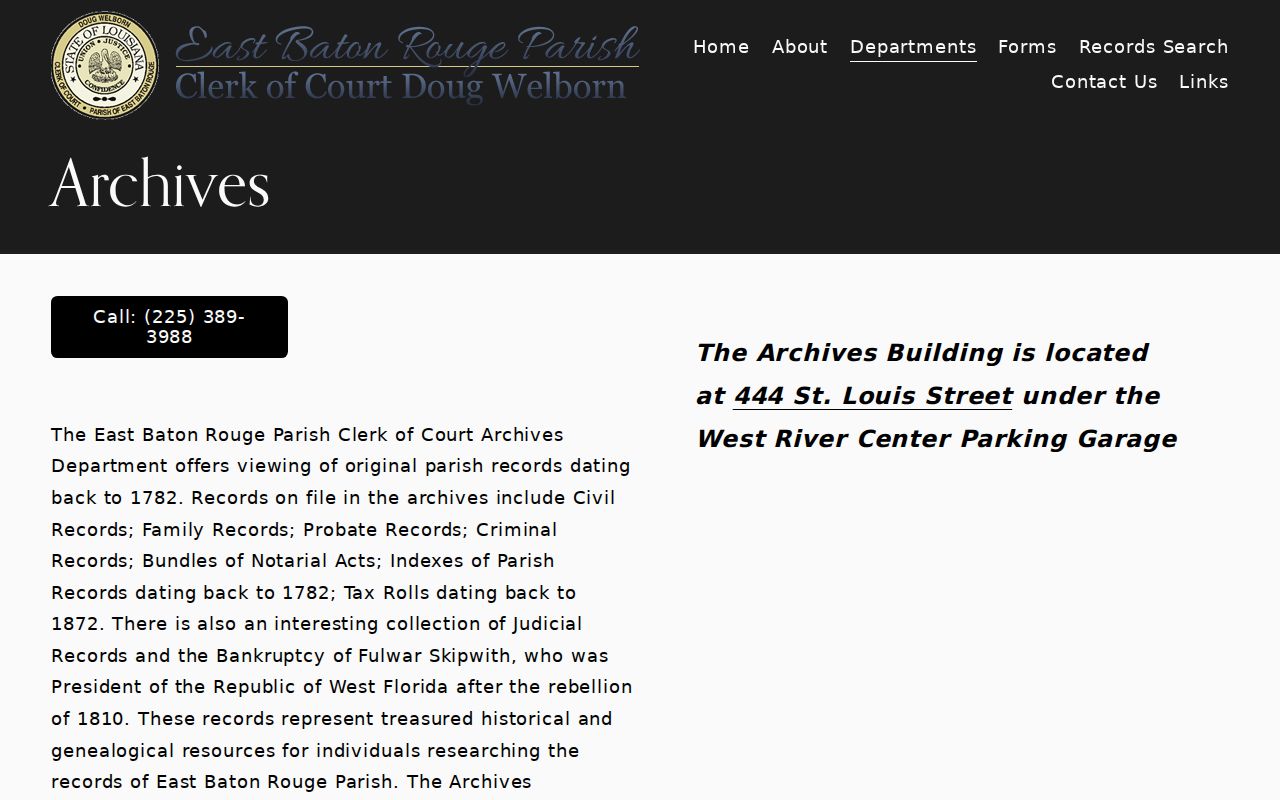
The archive route gives an older civil docket a clear local destination. A searcher is left with an answer, not an unexplained no-result.
Hearings on the Civil Docket
A setting can take many forms. The docket may list a notice of setting, a status conference, a pretrial conference, a dispositive motion, a bench trial, a jury trial, or a post-judgment hearing. Each entry is an event assigned to that case, with its date and section. It is not a promise the matter ends that day. Compare the newest notice, the latest docket event, and the assigned division. Those three show where the case stands.
The 19th JDC public duty calendars identify court rotations. They do not list every civil motion or trial. For a setting in one case, use the subscribed Court Event Inquiry. Or call the assigned court and clerk. A moved date is a continuance or reset, not a ruling on the merits.
East Baton Rouge Parish Family Court Dockets
Not every family case sits in the 19th JDC. East Baton Rouge Family Court is a court of its own, with four divisions on the courthouse fourth floor. A divorce, custody, or support matter belongs there, not to a 19th JDC civil division. Some public activity may be open to view. Family files can also hold protected material, which changes what may be seen or copied.
That split explains a failed lookup. If an East Baton Rouge Parish civil docket search turns up no divorce, custody, or support case, the Family Court's separate administration and case type are likely the reason. Call the responsible office. An empty online result does not settle the question.
The 19th JDC minutes and transcripts page sorts out two different records: the clerk's minutes and the reporter's verbatim transcript.
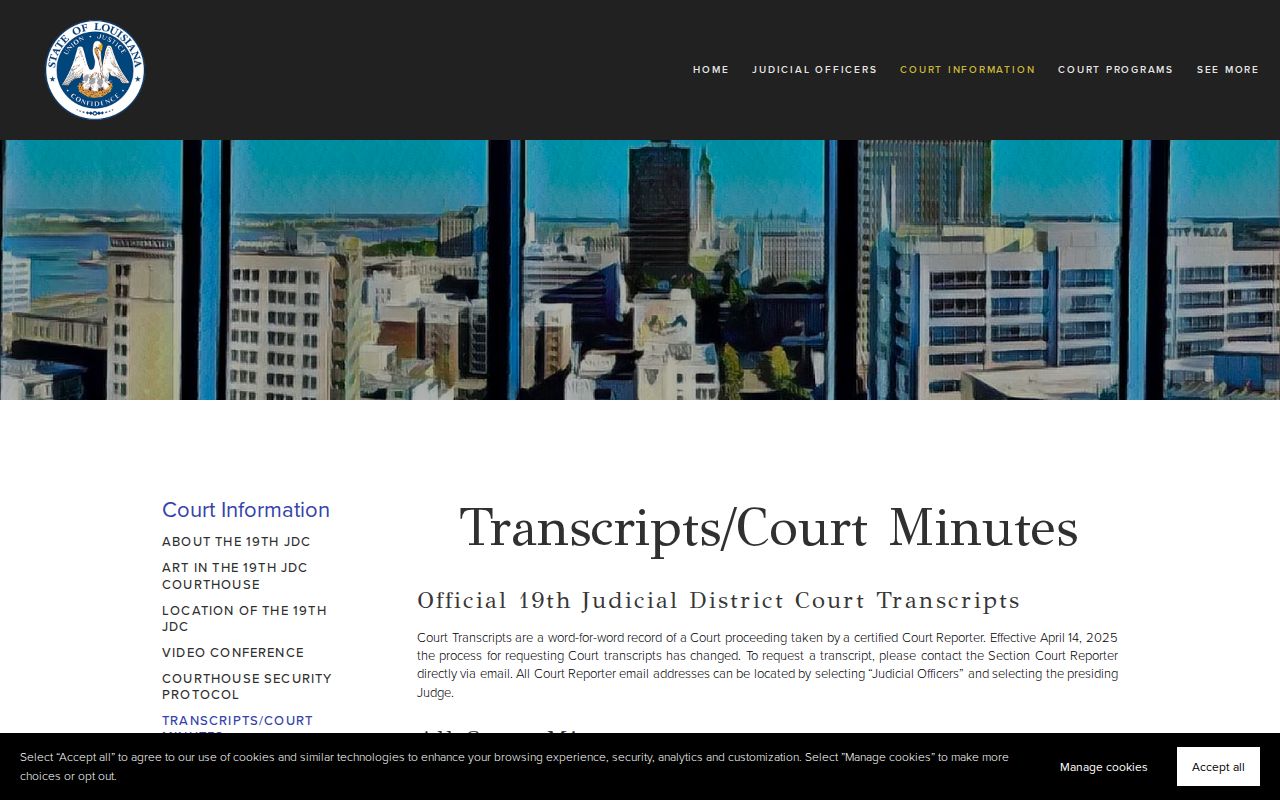
That difference keeps a transcript request off the wrong counter.
Who Can See Civil Dockets
Civil pleadings and docket activity in East Baton Rouge Parish are open to the public, within legal limits. La. R.S. 44:1 defines what counts as a public record. Article 253 extends the paper-access rules to electronic filings. The clerk lets you examine records for free in person during regular hours. Remote ClerkConnect access and copying follow the fee structures the clerk publishes.
Some files stay closed. Sealed matters, protected personal identifiers, adoption material, and parts of family or domestic-violence files can all be restricted, and the public route does not erase those limits. When you ask for a judgment, a minute entry, a docket, or any other record, name what you want. Be precise. That lets the office identify the product and the access rule that applies.
Access point: A screen view, docket entry, filed document, and certified copy are distinct civil-record products. Ask the East Baton Rouge Parish clerk for the exact product required.
East Baton Rouge Parish Civil Docket Terms
Many civil docket words describe a procedural step rather than a final result. Read them in order. The sequence tells the story of the case.
- Exception
- A Louisiana civil pleading that challenges a claim or procedure.
- Nonsuit
- A civil plaintiff ends the suit without an adjudication on the merits.
- DWOP
- Dismissal for want of prosecution, meaning the case was closed for failure to move it forward.
- Default judgment
- A judgment entered when the procedural requirements for default are met.
These labels are not the order or the judgment. When wording matters, request the underlying document from the East Baton Rouge Parish records custodian.
Civil dockets do not stop at the main ruling. Post-judgment activity can show up later. It may appear as an abstract, a garnishment, a writ, a satisfaction, an execution step, or an appeal. An entry naming one of these events does not state every term of the judgment. Get the signed record when you need its exact language.
Always read the later entry with the underlying order.